Healthy communities and healthy lungs
Executive summary
The South West London (SWL) 2025 spring engagement programme in Wandsworth focused on understanding residents’ access to NHS services, healthy lifestyle behaviours, and views on respiratory health (“healthy lungs”), particularly among Core20 and underserved communities.
Respiratory health remains a significant concern in Wandsworth. The borough experiences high emergency admissions for Chronic Obstructive Pulmonary Disease (COPD) and lower respiratory tract infections in children, despite some conditions being below regional and national prevalence averages. Smoking continues to be a leading cause of death and illness, with young people in Wandsworth more than twice as likely to smoke at age 15 compared with their peers across London. Air pollution, particularly around main roads and town centres, further affects lung health, contributing to hospital admissions and early deaths.
11 local voluntary, community and social enterprise (VCSE) organisations were funded to deliver 32 activities and to have in-depth conversations with just over 350 people from a range of ethnicities, socio-economic and health backgrounds.
Key borough wide findings:
- Accessing health and care services is often difficult due to long waits, confusing systems, and slow referrals.
- Digital-first systems create barriers for people with limited English, literacy, or confidence in technology.
- People value trusted, local support and culturally sensitive spaces to navigate care and maintain wellbeing.
- Everyday environments including green spaces, safe areas, and simple activities, significantly impact people’s mental health.
Key healthy lungs findings:
- People delay seeking medical help due to uncertainty about symptom severity and low confidence in recognising warning signs.
- Social networks strongly influence decisions to seek care sometimes causing delays.
- Poor air quality and environmental pollution impact lung health, particularly for vulnerable groups.
- Awareness of vaping risks among young people is low and people want stronger regulations.
Next steps
The insight in this report is presented by ward to support a neighbourhood approach.
The findings from this report are being shared with our local and health partners in Wandsworth and across South West London.
Introduction
This report details the feedback we received in Wandsworth borough during our South West London 2025 spring engagement programme. Through involved worked with community organisations primarily working with our Core20 populations and in our more deprived areas, providing a voice to the most marginalised and underserved. We offered grants of up to £550 to VCSE organisations to hold activities with these populations to help us understand these communities’ access to and experience of local NHS services, as well as their behaviours in maintaining healthy lifestyles.
Our approach for this phase shifted to focus more on gathering qualitative feedback rather than sharing communication messages, as was the case in the Winter phase. Funding was targeted to address health inequalities. 9 of the 11 funded organisations engaged with people in Battersea, focusing on Core20+5 wards such as Latchmere, Shaftesbury, Queenstown and Falconbrook. The remaining organisations worked with communities in Roehampton, including the Alton Estate, ensuring that voices from some of the most deprived areas in Wandsworth were heard.
In each borough there was a particular area of focus. In Wandsworth, this was respiratory health (healthy lungs). At the same time, we kept the conversations broad to capture what mattered most to local people. We chose healthy lungs because respiratory health remains a significant concern. Challenges include high emergency admissions for Chronic Obstructive Pulmonary Disease (COPD) and lower respiratory tract infections in children, even though some conditions are below regional and national prevalence averages. Smoking continues to be a major cause of death and illness, with young people in Wandsworth more than twice as likely to smoke at age 15 compared with peers across London. Air pollution, particularly around main roads and town centres, continues to affect lung health, contributing to hospital admissions and estimated deaths. Residents with long-term conditions reported limited engagement with virtual ward services due to concerns about monitoring symptoms at home. Physical activity is recognised as crucial for maintaining health, yet vulnerable groups, including older adults, people from Global Majority communities, and people on low incomes, face barriers to staying active – a summary of existing evidence relating to respiratory health can be found in Appendix A.
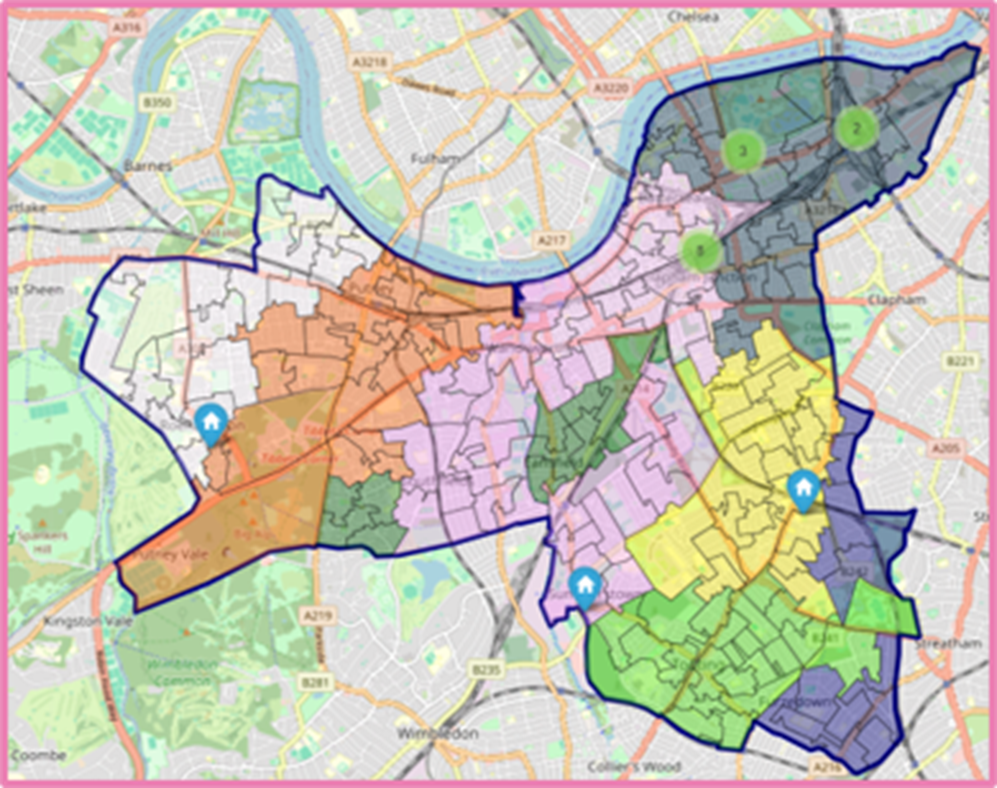
To support the move to neighbourhood working, we have mapped the organisations we funded by location and approximate reach of their engagement activities – the Wandsworth map can be found in Appendix B.
Methodology
To support programme delivery and coordination, we worked with Wandsworth Care Alliance who held trusted relationships with local groups and were able to provide knowledge and expertise to successfully deliver the work.
Grants were awarded based on who the organisation could reach and how closely their approach matched with people and communities we wanted to hear from, as well as their engagement approach.
Across South West London, we worked with 87 organisations reaching 6,019 local people from 57 ethnicities. In Wandsworth, we awarded healthy communities grants to 11 organisations, who conducted 32 activities and events and had in-depth conversations with just over 350 local people from 34 ethnicities. Activities ranged from arts and craft sessions with children and young people, a volleyball game with people in Battersea, an afternoon tea for older people and a gardening session with a resident’s association.
Successful organisations were invited to attend an online training session to support them to collect insight in inclusive and accessible ways. Each group was asked to explore the following topics using prompts to encourage conversation: experiences of NHS services; how people stay healthy; knowing when to seek help and understanding other factors that shape people’s health and wellbeing. In Wandsworth we also asked questions about how people keep their lungs healthy.
Following their event, organisations were asked to submit a summary of what they heard, together with quotes and photos. Where it was identified that more insight could have been shared or additional support was needed Wandsworth followed up with one-to-one conversations with a sample of organisations.
Healthy communities insight – challenges and barriers
Following our winter engagement work, we began mapping VCSE organisations with emerging neighbourhood areas. We have reviewed the healthy communities’ insights by ward to support the move towards neighbourhood health. Organisations taking part in the spring grants programme have been mapped to their base locations, while recognising that local people may have attended activities from other parts of the borough.
Across Wandsworth, we heard from 351 people, either living in or connected to community networks and organisations in the following areas:
- Battersea Park
- Falconbrook
- Latchmere
- Nine Elms
- Queenstown
- Roehampton
- Shaftesbury
- Southfields
- Tooting
Key findings from Roehampton
We’ve focused on Roehampton because it is a Core20 area where reducing health inequalities is a priority. This means the insight highlights local needs so support can be targeted where it’s needed most.
Two organisations worked with communities in Roehampton, including the Alton Estate.
| Organisation | Activities | Who they spoke to (e.g. ethnicities, age, gender) |
|---|---|---|
| Roehampton Wellbeing for Women and Children works with women and children in Roehampton through various activities. | Two sport sessions with children and young people and their families, whilst having one-to-one conversations about air pollution. | 40 people aged between 45 – 59. People identified as autistic, having a learning disability or a mental health condition. People from Indian, Bangladeshi, Pakistani, Chinese, Mixed Black African and White heritage. |
| Sen Unity support children with sports, learning, and music to create a fun and inclusive experience for children of all abilities. | One chair-based exercises session whilst having discussions with families. | 12 People aged between 75 – 84. People identified with having long term conditions, Deaf or had partial loss of hearing. People from Chinese, Black British and White – Irish heritage. |
Key findings from these organisations:
Access to health and care services
Poor public transport limits access to health and community support.
Individuals from Roehampton Women’s Wellbeing feel that there is unreliable or inaccessible public transport in Roehampton which prevents them from reaching activities, appointments, or even just social connections. Without transport, people said they were cut off from the very services and activities that keep them healthy.
Women’s health
Women’s health and aftercare can be overlooked, leaving people worried and without the support they need. Roehampton Wellbeing for Women and Children participants described gaps in care relating to reproductive health, menopause and conditions that carry social stigma such as incontinence. Women said that these gaps can make everyday life harder and can prevent them from leaving the house. Aftercare was also an issue, people said they weren’t sure what steps to take once discharged from the GP and whether they were healing correctly.
“If you are isolated there is nobody to let you know you need to get stitches taken out or to see how you are doing.”
Some women are hesitant to use pharmacies for minor health issues because they worry about having to pay for medication. Even though people are informed that pharmacies can handle certain conditions, they feel safer going to their GP, who can prescribe medication for free.
Digital access
People feel that the NHS is designed for those who are already confident and digitally able. SEN Unity participants described how changes in the NHS particularly the move to digital-first access, fewer bookable appointments, and reductions in staff have created barriers that fall hardest on minority ethnic groups and people in insecure housing situations.
“It’s all going online, and I think they’re only hearing from people who can do online.”
Key findings from Battersea
We know that Battersea is a priority area for addressing health inequalities including some of our core20+5 and deprived areas. Nine organisations worked with communities focused on this geography, covering the borough wards of Battersea Park, Falconbrook, Latchmere, Nine Elms, Shaftesbury, and Queenstown. Engagement also took place on key local estates, including the Winstanley and York Road Estate, and Falcon Road Estate.
| Organisation | Activities | Who they spoke to (e.g. ethnicities, age, gender) |
|---|---|---|
| Battersea Befriending Network is a local, voluntary, befriending scheme for users of mental health services in Wandsworth. | Ran two befriending social events whilst having discussions about healthy lifestyles. | 12 people aged between 45 – 59. People identified as Deaf or having partial hearing. People from Asian British, Black British, Pakistani, Jewish, Mixed Asian & White, White – British, Northern Irish, Welsh, Scottish heritage. |
| Falcon Estate Residents Association – an organisation that supports residents who live on the Falcon Estate. | Ran a gardening session and had discussions to understand residents’ feelings on noise and air pollution. | 15 people aged between 60 – 64. People identified as having a long term or mental health condition. People from Indian, Chinese, Asian British, Black British, Black Caribbean, Black Ghanaian, Black – Sudanese, Black Nigerian, Black Somali, Arab. Turkish, Afghan, Latin/South/Central American, Mixed Black Caribbean & White, White – British, Northern Irish, Welsh, Scottish, White – European, White – Australian/New Zealand, White – Italian, White – North American, White Polish and White – Eastern European heritage. |
| GoodGym – an organisation of local residents who run, walk, or cycle to help out community projects and older people in Wandsworth | One group volunteering session in Battersea whilst holding one-to-one discussions. | Data not captured |
| Happy Homes – is dedicated to supporting Asian families in Wandsworth. | Three focus groups with their members. | 150 people aged between 30 – 44. People identified as having a Learning disability, mental health condition and/or autism People from Indian, Asian British, Black Caribbean and Bangladeshi heritage. |
| Her, Me and ADHD CIC provide practical support to Primary and Secondary school aged girls with ADHD. | Three focus groups with its members. | 15 peopled aged between 45 – 59. People identified as having a long-term condition or neurodiverse. People from Black British, White – British, Northern Irish, Welsh, Scottish, Black – Sudanese, Latin/South/Central American, Arab, White – Eastern European heritage. |
| Living Truth CIC is a community interest company based in Battersea that focuses on supporting the community with free weekly meals. | Three focus groups alongside a cultural festivity programme during half term and one after school food club. | 18 people aged between 30 – 44. People identified as blind or experiencing sight loss. People from Bangladeshi, Indian, Pakistani, Vietnamese, Filipino, Asian British, Black British, Black Caribbean, Black African, Black Sudanese, Black Nigerian, Black Somali, Yemeni, Afghan, Latin/South/Central American, Mixed Asian & White, Mixed Black Caribbean & White, Mixed Asian and White, White – British, Northern Irish, Welsh, Scottish ;White – Irish and Gypsy, Roma, Traveler heritage. |
| Mummy’s Day Out Gives Back CIC offers a supportive environment for mums to share their experiences, seek support, and make new friends. | Ran two group sessions and telephone interviews. | 7 people aged between 30 – 44. People from Black British, Black Caribbean, Black African, Black Ghanaian and Black Nigerian heritage. |
| Share Community supports people with a learning disability. | Nine engagement events with members including workshops, focus groups and one-to-one discussions. | 42 People aged between 30 – 44. People identify as having a mental health condition, autism or learning disabled. People from White – British, Northern Irish, Welsh, Scottish and Black British heritage. |
| Women of Wandsworth support intergenerational projects in Battersea. | Ran a lunch club with older people living in Battersea and held group and one-to-one conversations | 24 People aged 90+. People identified as having long term conditions, Deafness or partial loss of hearing, diabetes and high blood pressure. People from Chinese, Filipino, Black Caribbean, Malay, Mixed Black Caribbean & White, White – British, Northern Irish, Welsh, Scottish, White – European, White – North America and Black British heritage. |
Key findings from these organisations:
Access to health and care services
Families accessing neurodevelopmental pathways face long waits, multiple referral lists, and inconsistent support, leaving children and parents without help or support for a long time. Parents said that children can wait years for diagnosis, particularly when autism spectrum disorder (ASD) and Attention-Deficit/Hyperactivity Disorder (ADHD) are both suspected, because each condition has separate referral pathways.
Schools and nurseries often require a formal diagnosis before putting interventions in place, leaving families without early support, and administrative issues such as lost forms and cancelled appointments cause unnecessary delays and stress.
“There should be one pathway. Now, the child is diagnosed with one [condition] and then has to join another waiting list to be diagnosed with the other.” (Her, Me and ADHD CIC)
People can find it hard to use healthcare if they do not get enough help to navigate services. Too much responsibility can be placed on people to work out how to access care, without clear or timely support. For people with learning disabilities, it could mean that essential services such as health checks or 111 were underused or misunderstood. People suggested having trusted community advice centres or having learning disability nurses available in communities to support people with care and aftercare.
Older adults living in sheltered or supported housing may be at risk of poor self-care and unnecessary hospital visits because they feel they do not always get clear guidance about their health. People living in sheltered or supported living said that they often receive conflicting advice from different doctors and can struggle to understand medication instructions, which increases reliance on GPs and A&E. Social isolation can make these challenges worse. People wanted to have contact with a named GP or healthcare professional as care would feel more personalised and supportive.
“Having access to simple, in-person advice especially for older individuals living in supported housing would help prevent confusion, improve self-care, and reduce unnecessary GP or A&E visits.” (WOW Wandsworth)
Good transport links from Clapham Junction station enable residents to be more mobile. Nearby amenities such as York Gardens Park and the library offer access to free newspapers and community events, supporting both physical activity and social connection. This contrasts with the feedback received from Roehampton.
Culturally competent care
Some people using maternity services in Wandsworth feel they must fight to be involved in decisions about their care. For people who identify from African and Caribbean backgrounds expressed the importance of having postnatal care delivered by professionals who understand their cultural background and lived experiences. One mother said that at times she felt pressured to follow the advice by professionals but “stood her ground and said no I don’t want that for my child” (Mummy’s Day Out).
Other people who had used maternity services in Wandsworth had mixed experiences with some having to advocate for themselves to make sure they were involved in decisions about their care or were subsequently referred to the right service having to “stand up for themselves” to make sure they were being treated fairly or involved in decision making.
Gypsy, Roma, and Traveller communities face barriers due to mobility, discrimination, and fragmented health records. Participants explained that health records are not nationally accessible, creating repeated registration processes and delays when families move between areas. Some reported experiences of discrimination when presenting at GP surgeries or community clinics. Digital solutions, such as the NHS App, are also limited for those with low literacy or highly mobile lifestyles.
“Why can’t health records be national so they can just go where they like, and information follows them?” (Living Truth CIC)
People would like women-only, culturally sensitive spaces. South Asian and Muslim women highlighted the importance of women-only, culturally sensitive leisure spaces to support physical and mental wellbeing. Others felt that guidance and health advice that ignored cultural practices such as food made them feel excluded.
“Everything needs to be culturally sensitive, if I can’t see the food that I eat in the guidance, then it’s not for me.” (Happy Homes)
Mental health
Media and current affairs can have an impact on people’s mental wellbeing. Older residents said that they have chosen to stop watching and reading the news as it’s directly affecting their emotional health. People want access to positive or community-focused media like newsletters and notification of community focused events. (WOW Wandsworth)
Borough wide themes
This section captures the key themes raised across Wandsworth engagement activities. It reflects shared experiences from multiple organisations and highlights where views and experiences differed for communities.
People in Wandsworth told us that accessing health and care services can feel difficult and confusing. Long waits for appointments, slow referrals to specialist services, and challenges navigating digital systems were common concerns, especially for those with limited English, literacy, or confidence using technology. Many said that having trusted local support and culturally sensitive spaces is important for understanding medical information, recovering from illness, and maintaining wellbeing. People also highlighted how everyday environments, such as access to green spaces, safe places to sit, and simple activities, support mental and physical health, while issues like poor housing, financial pressures, and social isolation can make it harder to stay well.
Accessing health and care
Accessing health and care services can feel like a struggle, with long waits and confusing systems. People shared frustrations with long waits for appointments, telephone calls and difficulties understanding how to navigate a sometimes-complex health and care booking system. People said that the 8am GP call-back system can be very difficult, particularly when you are very unwell.
Referrals for specialist services are described as slow including Mental Health therapies such as Talking Therapies. Once people have appointments, they said that there are still long waits between appointments. Parents and carers of children with SEND felt that there is insufficient provision in Wandsworth.
Digital is not one size fits all
The NHS’s shift to digital-first systems leaves people with limited English, literacy or low confidence in technology behind, causing greater inequalities. Online booking platforms, apps, and health forms are often confusing, with people preferring to phone or book in person but finding this option increasingly restricted when trying to access the service.
“It’s all going online, and I think they’re only hearing from people who can do online. For everyone else they don’t seem to care if they don’t reach you.” (Battersea Befriending Network).
Community connections
People need trusted, local support and culturally sensitive spaces to navigate care, recover and maintain wellbeing. Participants suggested having community advice points, a ‘known’ person to explain medical issues or act as a first point of contact, and nurses supporting interventions including home visits. Older adults, people from Global Majority communities and women described a need for culturally appropriate, women-only spaces and activities to combat loneliness and strengthen wellbeing. Aftercare to check on recovery after medical incidents was also highlighted as crucial.
Everyday environments shape mental health as much as medical care. Access to green spaces, safe places to sit, and simple activities such as walking, cooking, or being with animals were described as transformative. People stressed that “little things” like parks, pets, and mindful moments can make a bigger difference than medication. However, barriers such as poor housing conditions, damp homes, crime, and financial stress made it harder to maintain good mental health.
Healthy lungs – awareness, attitudes and behaviours
People are worried that pollution harms lungs, especially for those with asthma or living in places with poorer air quality. People acknowledged the benefits of nature and clean air while raising concerns about environmental pollution. “Battersea is polluted, the air effects our lungs.” (Living Truth CIC)
People often delay seeking medical help because they’re unsure whether symptoms can be managed at home or require professional attention. People can underestimate the seriousness of issues like persistent coughs or breathlessness, as they are worried that they might waste the GP’s time. This hesitation was especially common among those experiencing respiratory problems for the first time or who lack personal connections to others with lung conditions.
People’s decisions about when to seek medical help are strongly influenced by the experiences and advice of friends, family, and social networks with connections and past experiences strongly influencing these decisions.
“My child had a severe cough, and I didn’t know what to do. My friend advised me to call 111 who helped me realise it was urgent, and I had to go to A&E.”
Confidence in recognising early warning signs is generally low and support for navigating these decisions is limited, particularly if English is a second or third language.
People’s mistrust in healthcare systems and long waiting times further discourage engagement with preventative care. For those who had sought attention, they said they would visit a pharmacy or call 111 if things became bad.
“There should be more awareness about the symptoms of serious conditions that require urgent help. Many people don’t recognise early warning signs and delay seeking medical attention, which can be dangerous.” (Good Gym)
Smokers may not recognise or act on early symptoms of lung problems as shortness of breath is seen as “normal”. For people who do smoke, they understood the negative impact smoking has on their health however, they continue due to stress, mental health challenges or just low motivation. Participants said that more information and education about smoking would really help.
“I’ve been smoking for years; shortness of breath just feels normal now. I don’t really see the point in going to the doctor unless it gets bad.” (Sen Unity).
Awareness of vaping risks, particularly among young people, is low, and social media can glamorise these habits. Participants raised concerns that young people do not fully understand the harms of vaping and that social media promotion glamorises it.
“Strong call for tighter controls or restrictions on how vaping is marketed.” (Happy Homes)
Next steps
The insight in this report is presented by ward to support a neighbourhood approach.
The findings from this report are being shared with our local and health partners in Wandsworth and across South West London.
Appendices
Appendix A: Respiratory health a summary of existing evidence
Limited qualitative insight exists from people and communities about their views and experiences of respiratory health. However, the following reports provide additional evidence and insight.
Respiratory health in Wandsworth
Chronic diseases (long term conditions) including respiratory diseases are the leading causes of death and disability worldwide. Respiratory illnesses include asthma, chronic obstructive pulmonary disease (COPD), pulmonary fibrosis and pneumonia. These illnesses can affect how easily we breathe and how well we feel day to day. Some of these can build up slowly over time, while others may appear suddenly.
Although COPD prevalence in Wandsworth is lower than the London average, emergency admission for COPD are disproportionately high and higher than the average in London for people aged over 35 years old at 401.6 per 100,000 in 2019/20. The Wandsworth JSNA (London Borough Wandsworth) identifies inequalities in diagnosis, smoking cessation uptake and access to primary respiratory care services. Respiratory infections and asthma in pre-school and school-age children show admissions for lower respiratory tract infections (age 2-4) in 2022/23 was 62.5 per 10,000, the 8th highest in London and significantly above average.
Respiratory disease in London (Department of Health & Social Care) shows a steady decrease in hospital admissions which are still high, with rates of asthma prevalence holding steady to 2023/24. The report suggests effective disease management but a continuing underlying burden and daily hospital admissions of children remain a concern. ULEZ and policies are cleaning the air, but indoor and boiler emissions remain issues with deprived communities experience disproportionate respiratory harms.
A qualitative evaluation of non-users’ views on virtual wards in Croydon, Merton, and Wandsworth (South West London Healthwatch including Healthwatch Croydon, and Healthwatch Wandsworth) found people with long-term conditions including respiratory illnesses chose not to engage with virtual ward services citing concerns about monitoring their symptoms at home.
Smoking
The Wandsworth JSNA (London Borough Wandsworth) highlights the need to reduce smoking rates and improve overall health outcomes in Wandsworth, with a particular focus on reducing health inequalities related to smoking. The What about Youth survey of smoking prevalence in 2014/15 showed that Wandsworth ranked the highest of all London boroughs in all three areas of the survey domains: current smokers (14.3%), regular (6.7%) and occasional Smokers (7.6%). In comparison to London, young people in Wandsworth who report regular smoking at age 15 years was 6.7% compared with 3.4% for London. Survey data for 15 year olds in Wandsworth are more than twice as likely to smoke than their peers across London.
Air quality
The Joint Wandsworth Health and Wellbeing Strategy 2024-2029 (London Borough Wandsworth) identifies that whilst air pollution is not always visible, it can have a significant and detrimental impact on our quality of life and wellbeing in inner-city boroughs like Wandsworth. Air quality is improving in Wandsworth but there are still areas, especially around main roads and town centres, that exceed legal UK objective limits. The most common air pollutants can impact on health including exacerbation of asthma, impaired lung development in children, increased risk of chronic conditions such as respiratory diseases as well as lung cancer, leading to reduced life expectancy. Vulnerable groups include children, pregnant women, the elderly, and those with long-term conditions. The Greater London Authority estimated that in 2019 the equivalent of between 3,600 to 4,100 deaths were attributable to air pollution in the city. Estimated fraction of mortality or deaths attributable to particulate air pollution place Wandsworth 13th in London at 6.6%, this is above the England and London averages of 5.5% and 6.5% respectively
The Wandsworth Citizens’ Assembly on air quality, a panel of 50 residents explored how air pollution impacts health and developed community led solutions including cleaner transport and long-term monitoring, which fed into the Air Quality Action Plan 2023-2028 (London Borough Wandsworth). This outlines links between poor air quality and increased respiratory illness and proposes borough-wide actions.
Physical activity
A South West London insight report (South West London NHS) outlines how some vulnerable groups including older adults, people from Global Majority communities and people on low incomes face barriers to staying active. A Merton and Wandsworth Children and Young People’s Engagement insight report (South West London NHS) identified how physical and mental health are interconnected and a strong awareness that physical activity is a component of health with family activities encouraging healthy lifestyles.
Appendix B: Mapping VCSE organisation locations and approximate reach of communities
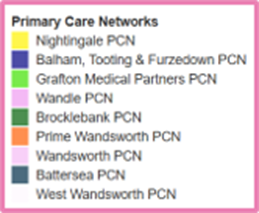
Map showing which PCN areas funded VCSE organisations location and reach of their engagement activities.